Wednesday, 30 July 2025

Body Contouring Devices Market: Forecasting Growth Trends and Challenges Ahead

 The global body contouring devices market was valued at approximately USD 1.50 billion in 2023 and is projected to reach USD 3.86 billion by 2030, reflecting a compound annual growth rate (CAGR) of 14.3% from 2024 to 2030. Body contouring devices can be classified as invasive, non-invasive, or minimally invasive, and are designed to reshape specific areas of the body. This reshaping can be achieved through surgical methods such as liposuction or through less invasive techniques like cryo lipolysis, injection lipolysis, radiofrequency lipolysis, and laser lipolysis. The primary objective of body contouring procedures is to eliminate unwanted fat and enhance firmness in the targeted treatment area.


The rising prevalence of obesity worldwide, driven by unhealthy lifestyles, is expected to propel the growth of the global market. Additionally, the improved safety and efficacy of these techniques, which contribute to increased life expectancy, are anticipated to further boost demand. Initiatives such as mergers and acquisitions, new product launches, and partnerships undertaken by major companies for product research and distribution are also expected to drive market expansion in the coming years.


Non-invasive fat reduction, or nonsurgical fat reduction, encompasses minimally invasive treatments that effectively break down stubborn subcutaneous fat pockets beneath the skin. Key factors contributing to market growth include the rising demand for body contouring treatments, which are non-invasive and require no downtime after the procedure. For instance, SculpSure, developed by Cynosure, Inc., is a non-invasive body contouring laser device that targets and destroys approximately 24% of unwanted fat cells in just 25 minutes.


Key Market Trends & Insights


• The North America body contouring devices market led the industry, capturing a revenue share of 35.2% in 2023. This dominance can be attributed to factors such as a rising geriatric population, strong medical infrastructure, well-established reimbursement policies, the presence of key market players, and advancements in aesthetic body contouring procedures.
• The Asia Pacific body contouring devices market is expected to record the fastest compound annual growth rate (CAGR) during the forecast period. Countries like China, Japan, and India are emerging economies with well-developed healthcare infrastructures and are increasingly focusing on research and development activities.
• In terms of device type, non-invasive and minimally invasive devices dominated the market, accounting for a share of 77.5% in 2023. The introduction of various products, investments from market players, and high demand for non-invasive and minimally invasive procedures—due to their safety and cost-effectiveness—are driving market growth. The expansion of the market is further fueled by the rising popularity of non-invasive body contouring treatments that require no recovery time.


Order a free sample PDF of the Body Contouring Devices Market Intelligence Study, published by Grand View Research.


Market Size & Forecast


• 2023 Market Size: USD 1.50 Billion
• 2030 Projected Market Size: USD 3.86 Billion
• CAGR (2024-2030): 14.3%
• North America: Largest market in 2023


Key Companies & Market Share Insights


Some of the key companies in the body contouring devices market include Cynosure, Inc., Alma Lasers, Merz Pharma Gmbh, Allergan, Syneron Medical Ltd. and others. Key players are taking several strategic initiatives, such as mergers and acquisitions, and partnerships with other major companies.

• Cynosure, Inc. offers various body contouring devices for noninvasive fat reduction and skin tightening. One of their products is SculpSure, a laser system explicitly focused on reducing fat cells. Another device is the TempSure Firm handpiece, designed to enhance skin tightness and texture. These products are included in Cynosure's more comprehensive range of aesthetic devices, which also target hair removal, skin rejuvenation, and other issues.

• Alma Lasers offers diverse body contouring devices designed to address various aesthetic concerns, including fat reduction, skin tightening, and cellulite treatment. Their products include the Accent Prime system, which utilizes ultrasound and radiofrequency technologies to deliver effective body sculpting results with minimal downtime.


Key Players


• Cynosure, Inc.
• Alma Lasers
• Allergan Plc
• Merz Pharma Gmbh
• Candela Medical Ltd.
• Solta Medical Bausch Health Companies, Inc.
• Lutronic Corporation
• InMode Ltd
• Fotona
• Sofwave Medical LTD
• Sciton Inc
• Lumenis


Conclusion


The body contouring devices market is poised for significant growth, driven by increasing obesity rates, advancements in treatment safety and efficacy, and the rising popularity of non-invasive procedures. As consumer demand for effective body reshaping solutions continues to rise, innovations in technology and strategic initiatives by key players will play a crucial role in shaping the future of this market.


Explore Horizon Databook – The world's most expansive market intelligence platform developed by Grand View Research.

Bone Grafts And Substitutes Market: Technological Advancements and Their Impact

 The global bone grafts and substitutes market was valued at approximately USD 3.16 billion in 2024 and is expected to reach USD 4.60 billion by 2030, reflecting a compound annual growth rate (CAGR) of 6.6% from 2025 to 2030. The growth is primarily driven by the rising demand for synthetic substitutes and an increasing number of product approvals from regulatory bodies across various regions.


A significant factor contributing to market expansion is the growing application of bone grafts in dentistry. These grafts are predominantly used as scaffolds and fillers to enhance bone formation and promote healing. The popularity of dental implant surgeries has surged, aided by advanced surgical techniques that incorporate bone grafts and regeneration. Dental implants are increasingly becoming the preferred solution for tooth loss, fueled by advancements in practitioner skills and dental technology. According to a WHO report from 2023, the global average prevalence of total tooth loss is nearly 7% among individuals aged 20 and older, rising to an estimated 23% for those aged 60 and above. This increasing incidence of tooth loss is further propelling market growth.


Moreover, a supportive regulatory environment and ongoing initiatives by market players to develop innovative products with enhanced bioactivity, biocompatibility, and favorable mechanical properties are additional factors driving market growth. For example, in March 2022, Molecular Matrix, Inc. launched the Osteo-P Synthetic Bone Graft Substitute for musculoskeletal applications, utilizing HCCP technology beneficial for bone regeneration. Similarly, in October 2020, Graftys achieved Medical Device Single Audit Program (MDSAP) certification for its Sterile Calcium Phosphate Resorbable Bone Void Fillers and delivery systems in multiple countries, including Australia, Brazil, Canada, and the U.S.


Key Market Trends & Insights


  • Regional Dominance: North America led the global bone grafts and substitutes market in 2024, capturing the largest revenue share of 42.1%. Contributing factors include a growing geriatric population and an increase in sports injuries and accidents.
  • U.S. Market Growth: The market for bone grafts and substitutes in the U.S. is projected to experience significant growth, driven by rising sports injuries. Approximately 30 million children and teenagers participate in organized sports in the U.S., leading to over 3.5 million injuries annually.
  • Material Type Trends: The allograft segment accounted for the largest revenue share of 60.2% in 2024 and is expected to see substantial growth. The increasing adoption of allografts is attributed to their osteoconductivity and immediate structural support.
  • Application Insights: The spinal fusion sub-segment held the largest market share at 60.1% in 2024. The growing use of bone graft materials for spondylosyndesis and an aging population susceptible to orthopedic conditions are driving revenue in this segment.


Order a free sample PDF of the Bone Grafts And Substitutes Market Intelligence Study, published by Grand View Research.


Market Size & Forecast

  • 2024 Market Size: USD 3.16 Billion
  • 2030 Projected Market Size: USD 4.60 Billion
  • CAGR (2025-2030): 6.6%
  • North America: Largest market in 2024
  • Asia Pacific: Fastest growing market


Key Companies & Market Share Insights

The industry is marked by the presence of various large and small business operators. It is competitive and dominated by participants such as Orthofix, Stryker, Nuvasive, Medtronic, DePuy Synthes, and Wright Medical, among others. Key players are emphasizing executing innovative strategies such as market penetration, mergers and acquisitions, partnerships, and distribution agreements to bolster their revenue.


Key Players

  • AlloSource
  • DePuy Synthes (Johnson & Johnson)
  • Baxter
  • NuVasive, Inc.
  • Smith + Nephew
  • Medtronic
  • Orthofix Medical, Inc.
  • OST Laboratories
  • Zimmer Biomet
  • Geistlich Pharma AG
  • Stryker
  • Biobank


Conclusion

The bone grafts and substitutes market is poised for robust growth driven by technological advancements, increasing applications in dentistry, and a supportive regulatory framework. As the demand for innovative and effective solutions continues to rise, the market is likely to witness significant developments and opportunities in the coming years. 


Explore Horizon Databook – The world's most expansive market intelligence platform developed by Grand View Research.
Tuesday, 29 July 2025

Breast MRI Market: Insights into Cost-Effectiveness and Accessibility

 In 2024, the global breast MRI market was valued at USD 2.30 billion and is projected to grow to USD 5.28 billion by 2033, reflecting a compound annual growth rate (CAGR) of 9.70% from 2025 to 2033. This growth is driven by advancements in MRI technology and the increasing global burden of breast cancer.


Rising awareness and widespread breast cancer screening initiatives are key factors contributing to market expansion. The growing incidence of breast cancer continues to be a major driver of demand for breast MRI, which serves as a critical diagnostic and screening tool, especially for individuals at high risk. Breast MRI is instrumental in identifying additional malignant lesions within the breast.


According to the World Health Organization (February 2025), approximately 1 in 20 women globally will be diagnosed with breast cancer in their lifetime. If current trends persist, annual new breast cancer cases could reach 3.2 million by 2050, with an estimated 1.1 million related deaths per year. In 2022, approximately 2.3 million new cases and 670,000 deaths were reported globally. This rising prevalence significantly boosts the need for effective imaging tools like breast MRI.


In addition to global growth, key regions—including Asia, Europe, North America, and Latin America—are experiencing high rates of breast cancer, with incidence projected to rise sharply by 2030. This highlights the increasing regional demand for advanced diagnostic technologies such as breast MRI, which aids in early detection, thorough evaluation, and effective disease management.


Key Market Trends & Insights


  • Regional Insights: North America held the largest market share in 2024, accounting for 44.79% of the global market. The region is projected to continue growing at the fastest pace due to the strong presence of major players like GE Healthcare, Siemens Healthineers, and Philips Healthcare, as well as the widespread use of advanced imaging infrastructure.
  • By Product: The systems segment dominated the market with a 75.44% revenue share in 2024. This is driven by the increasing adoption of high-tech MRI systems and innovations in imaging. Notably, in February 2025, researchers at the University of Waterloo unveiled an AI-enhanced MRI method.
  • By Condition: The malignant segment led with 84.18% of the market share in 2024 and is expected to grow fastest, due to the widespread use of breast MRI in detecting, characterizing, and staging cancerous tumors.
  • By Imaging Technique/Contrast Use: Contrast-Enhanced MRI (CE-MRI) was the leading segment in 2024, supported by growing approvals for contrast agents. For example, Guerbet’s Elucirem (Gadopiclenol) received European Commission approval in December 2023 for use in breast and other organ imaging.
  • By End Use: Hospitals and clinics dominated with a 42.46% market share in 2024, benefiting from established imaging infrastructure, skilled radiologists, and high patient throughput.


Order a free sample PDF of the Breast MRI Market Intelligence Study, published by Grand View Research.


Market Size & Forecast


  • 2024 Market Size: USD 2.30 Billion
  • 2033 Projected Market Size: USD 5.28 Billion
  • CAGR (2025-2033): 9.70%
  • North America: Largest market in 2024


Key Companies & Market Share Insights


Leading players in the breast MRI market are focusing on strategic initiatives such as regional expansion, product innovation, and partnerships to enhance their market position. Companies like GE Healthcare, Siemens Healthineers, and Philips Healthcare continue to play a pivotal role in shaping the industry.


Key Players


  • GE HealthCare
  • Siemens Medical Solutions USA, Inc.
  • Koninklijke Philips N.V.
  • CANON MEDICAL SYSTEMS USA, INC.
  • FUJIFILM
  • United Imaging Healthcare Co., Ltd.
  • AURORA HEALTHCARE US CORP
  • Quality Electrodynamics (QED)
  • MR Instruments, Inc.
  • iCAD, Inc
  • Subtle Medical, Inc.
  • Arterys (Tempus)
  • Esaote


Explore Horizon Databook – The world's most expansive market intelligence platform developed by Grand View Research.


Conclusion


The global breast MRI market is set for substantial growth, driven by technological advancements and the escalating global burden of breast cancer. Increased awareness, enhanced screening programs, and a strong push for early diagnosis are propelling demand for MRI as a vital diagnostic tool. With North America leading the way and technological innovations such as AI-enhanced imaging on the rise, the breast MRI market is well-positioned to experience significant expansion through 2033.

Biosensors Market Research: Insights into Emerging Applications

 The global biosensors market was estimated at USD 30.0 billion in 2024 and is projected to reach USD 48.6 billion by 2030, with a compound annual growth rate (CAGR) of 8.6% from 2025 to 2030. The rising demand for biosensors can be attributed to their diverse medical applications, the increasing number of diabetic patients, a high demand for compact diagnostic devices, and rapid technological advancements.


Early and accurate disease diagnosis is crucial for positive prognoses and patient survival. In recent years, there has been a significant increase in the demand for disposable, convenient, and cost-effective devices that offer fast response times. The emergence of COVID-19 positively impacted the medical device industry, as various methods were employed to scan for early symptoms of the virus. The biosensors market is poised for substantial growth, propelled by notable technological innovations and strategic initiatives from key market players. For example, in January 2023, Intricon, a developer and manufacturer of medical devices utilizing smart miniaturized electronics, inaugurated a Biosensors Center of Excellence (CoE).


This strategic initiative underscores Intricon's dedication to integrating its expertise and capabilities within a vertically integrated business unit focused on introducing biosensor devices to the medical market. The combination of technological innovation and targeted efforts is driving positive growth in the biosensors market.
Nanotechnology-based biosensors are anticipated to have a broad range of applications across various industries, including food analysis, imaging, and monitoring microbial activity. The global market is consolidating, driven by a growing preference for non-invasive biosensors, the increasing popularity of medical devices and specialty drugs, as well as rising research collaborations and contracts among manufacturers. For instance, Ethicon Endo-Surgery Inc. operates under contracts administered by Johnson & Johnson Innovation. Additionally, the growing awareness surrounding continuous health monitoring is contributing to industry growth, particularly among athletes, many of whom utilize Electromyography (EMG) biosensors to monitor their health and receive alerts if issues arise.


Key Market Trends & Insights


• North America held the largest share of more than 40.2% of the revenue in 2024 owing to the presence of key players and high incidence of targeted diseases in the region. Over the projected period, technological improvements, such as the introduction of miniaturized diagnostic equipment that provides increased market penetration of Electronic Medical Records (EMR), as well as precise & quick findings, are expected to fuel market expansion.
• As Asia Pacific is expected to witness the fastest CAGR of 9.9% from 2025 to 2030. The presence of significant unmet medical requirements for target diseases, such as cancer, diabetes, and other infectious diseases, as well as continuously improving healthcare expenditure in the region and increasing patient awareness, drive the regional market growth.
• Based on technology, the industry is categorized into piezoelectric, electrochemical, thermal, and optical. The electrochemical segment captured the largest market share of around 71.7% in 2024 and is expected to grow at the fastest CAGR of 8.7% from 2025 to 2030.
• Based on applications, the industry is segmented into bioreactor, medical, agriculture, environment, food toxicity, and others. In 2024, the medical segment dominated the industry and accounted for around 66.8% of the total revenue share. Biosensors are used in the fields of cholesterol testing, blood glucose monitoring, drug discovery, pregnancy testing, blood gas analyzer, and infectious disorders in the medical segment.
• The end-user segment includes research laboratories, the food industry, home healthcare diagnostics and security POC testing, and bio-defense. Biosensors in point-of-care testing led the market in 2024 accounting for a revenue share of 47.9%. Key factors driving the segment growth include technological advancements that create innovative products, such as ultra-sensitive printable biosensors for PoC applications that help detect or monitor organic fluids like urine, saliva, blood, and sweat.


Order a free sample PDF of the Biosensors Market Intelligence Study, published by Grand View Research.


Market Size & Forecast


• 2024 Market Size: USD 30.0 billion
• 2030 Projected Market Size: USD 48.6 billion
• CAGR (2025-2030): 8.6%
• North America: Largest market in 2024
• Asia Pacific: Fastest growing market


Key Companies & Market Share Insights


The biosensors market is characterized by intense competition, with key players employing various strategic initiatives to enhance their industry share. These strategies include new product launches, geographical expansion, mergers and acquisitions, collaborations, product upgrades, and partnerships.


Medtronic is a global health solutions provider engaged in the development, manufacturing, distribution, and commercialization of device-based medical therapies and services. The company is organized into four segments: minimally invasive therapies, cardiac and vascular group, restorative therapies, and diabetes group. With operations in over 370 locations across approximately 160 countries, Medtronic's products are utilized in surgical centers, hospitals, home care, and long-term care facilities. In the U.S., the company markets its diverse medical solutions through direct representatives, while using independent distributors and direct marketing in international markets.


Abbott is a leading global healthcare company focused on the development, manufacturing, and commercialization of healthcare products. It operates through four main segments: pharmaceutical products, diagnostic products, nutritional products, and medical devices. Abbott is also a prominent provider of blood glucose monitoring systems, with a presence in over 160 countries. The company's commitment to addressing global healthcare needs is further strengthened by its subsidiary, St. Jude Medical, which enhances Abbott's diverse portfolio and overall impact in the healthcare industry.


Key Players


• Abbott Laboratories
• Medtronic
• Biosensors International Group
• Pinnacle Technology, Inc.
• Dupont.
• Sensirion AG
• Thermo Fisher Scientific, Inc.
• F. Hoffmann-La Roche AG
• Siemens Healthineers
• Zimmer & Peacock AS
• Metrohm AG
• DexCom, Inc.
• Universal Biosensors, Inc.
• Johnson & Johnson Services, Inc.
• Nix Biosensors
• Cyrcadia Health
• Lifescan


Explore Horizon Databook – The world's most expansive market intelligence platform developed by Grand View Research.


Conclusion


The biosensors market is on the brink of significant expansion, fueled by technological advancements and increasing demand across various sectors. As the industry evolves, a focus on innovation and strategic partnerships will be essential for meeting the growing needs of healthcare and monitoring applications, particularly in light of rising health awareness among consumers.


Wednesday, 23 July 2025

Australia Legal Cannabis Market Segmentation To Understand Consumer Preferences

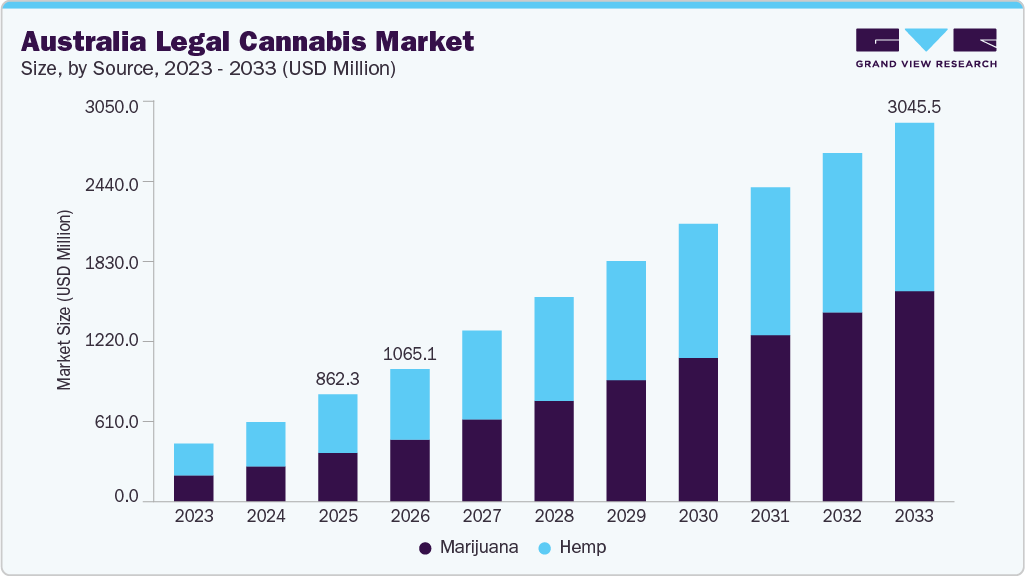
 The Australia legal cannabis market was valued at USD 123.9 million in 2024 and is projected to reach USD 815.1 million by 2033, expanding at a CAGR of 20.3% from 2025 to 2033. The market is primarily driven by the increasing awareness of the health benefits of cannabis and the progressive legalization of marijuana, especially for medical purposes.

Australia legal cannabis market size and growth forecast (2023-2033)

The surge in medical marijuana production due to rising demand in the pharmaceutical sector is also contributing to market growth. Since 2016, the Australian Government has legalized cannabis for medicinal use across all six states and two territories. Regulation of medicinal cannabis products is overseen by the Therapeutic Goods Administration (TGA).


Australia’s legal cannabis framework is dynamic and continues to evolve. In recent years, new legislation has allowed residents of the Australian Capital Territory (ACT) to cultivate up to four cannabis plants per household for personal use. In October 2023, ACT implemented updated regulations permitting adults over 18 to possess cannabis—up to 150 grams fresh or 50 grams dried—further contributing to increased usage and acceptance of cannabis products in the country.


Key Market Trends & Insights


  • By Source: The hemp segment led the market in 2024, accounting for 67.1% of total revenue. This is attributed to the rising prevalence of health issues such as epilepsy and sleep disorders, along with increasing demand for hemp-derived products, including CBD oils and supplements known for their therapeutic benefits.
  • By Derivatives: The CBD segment held the largest share at 63.5% in 2024. This growth stems from the legalization of low-dose CBD products by the TGA. Although these products are not yet registered on the Australian Register of Therapeutic Goods (ARTG), they are accessible under the Authorised Prescriber and Special Access schemes, allowing medical professionals to provide patients with CBD-based treatments.
  • By End Use: The industrial application segment dominated the market, contributing 63.6% of revenue in 2024. There is growing demand for hemp fibers and oil in various sectors including construction, personal care, food and beverage, automotive, and textiles. Hemp is increasingly used in products such as varnishes, lubricants, solvents, coatings, printing inks, and paints, supporting segment expansion.


Order a free sample PDF of the Australia Legal Cannabis Market Intelligence Study, published by Grand View Research.


Market Size & Forecast


  • 2024 Market Size: USD 123.9 Million
  • 2033 Projected Market Size: USD 815.1 Million
  • CAGR (2025-2033): 20.3%


Key Companies & Market Share Insights


The Australian legal cannabis market is witnessing increasing competition as companies adopt strategies such as product innovation, partnerships, and mergers and acquisitions to grow their market share.


In October 2023, AgriFutures Australia, a Research and Development Corporation, announced an investment of USD 2.5 million over five years to fund research in key areas including hemp primary production, hemp seeds and varieties, sustainability, and product development.


Notable players in the market include:

  • Zelira Therapeutics
  • AusCann Group Holdings Ltd.

These companies focus on supplying cannabis for medicinal use.

Emerging players such as ECOFIBRE and Bod Australia are actively involved in partnerships and clinical research, aiming to advance the development and accessibility of cannabis-based medical products in the country.


Key Players

  • Cann Group Limited
  • Zelira Therapeutics
  • AusCann Group Holdings Ltd.
  • Bod Australia
  • Althea Group
  • ECOFIBRE
  • Botanix Pharmaceuticals
  • EPSILON
  • Little Green Pharma
  • Incannex


Explore Horizon Databook – The world's most expansive market intelligence platform developed by Grand View Research.


Conclusion


The Australia legal cannabis market is poised for strong and sustained growth, driven by increasing medical acceptance, evolving legislation, and expanding industrial applications of hemp and cannabis-derived products. With favorable regulatory frameworks, especially in regions like the ACT, and growing investment in research and product development, the industry is expected to witness significant transformation through 2033. As both established and emerging players invest in innovation and partnerships, the market is set to expand rapidly, creating new opportunities across the medical, industrial, and wellness sectors.

Tuesday, 22 July 2025

Asia Pacific Active Pharmaceutical Ingredients Market Insights into Regulatory Frameworks

 The Asia Pacific active pharmaceutical ingredients (API) market was valued at USD 78.3 billion in 2023 and is projected to reach USD 125.5 billion by 2030, growing at a CAGR of 7.0% from 2024 to 2030. This growth is primarily driven by the rising incidence of chronic diseases, an aging population, and an increasing trend toward outsourcing API production. Additional growth factors include the incorporation of biologics in disease management and the growing number of regulatory approvals for new therapies.


The expiration of patents for key pharmaceuticals and the cost-effectiveness of manufacturing in countries like China and India further contribute to market expansion. The region held a 33.0% revenue share in the global API market, with pharmaceutical manufacturing being the leading application area. Other contributing sectors include nutraceuticals, cosmetics, and veterinary medicine, which reinforce the market's broad relevance.


According to the Pharmaceutical Research and Manufacturers Association, investments in API production—particularly in India and China—have surged, with over $5 billion in public and private sector funding during the past year. While regulatory frameworks for APIs vary across Asia Pacific countries, harmonization efforts by organizations such as the International Council for Harmonisation (ICH) aim to standardize practices globally. Agencies including India’s CDSCO and Singapore’s HSA enforce strict quality, safety, and efficacy standards across the region.


Key Market Trends & Insights


  • China led the Asia Pacific API market in 2023, accounting for 34.0% of total revenue. This leadership is linked to the growing burden of chronic illnesses such as cardiovascular diseases and cancer, which continue to drive demand for innovative pharmaceutical solutions.
  • By type of synthesis, synthetic APIs dominated the market with a 69.7% share in 2023. Their cost-efficiency, especially in price-sensitive markets, has led to widespread use. Ongoing investments in R&D are also supporting the development of eco-friendly synthetic methods aligned with international environmental standards.
  • By manufacturer type, the captive API segment held the largest share at 50.0% in 2023. This is due to technological advancements, improved manufacturing capabilities, and large-scale production needs. The segment is further supported by significant investments from major pharmaceutical companies.
  • By API type, innovative APIs captured the leading market share in 2023. Favorable regulatory policies and increased funding for R&D are supporting a strong development pipeline of new pharmaceutical compounds, many of which are expected to reach the market in the coming years.
  • By application, cardiovascular diseases represented the largest segment with a 21.2% share in 2023. The rising prevalence of conditions like hypertension and high cholesterol, especially among younger individuals and aging populations, has intensified demand for related APIs.


Order a free sample PDF of the Asia Pacific Active Pharmaceutical Ingredients Market Intelligence Study, published by Grand View Research.


Market Size & Forecast


  • 2023 Market Size: USD 78.3 Billion
  • 2030 Projected Market Size: USD 125.5 Billion
  • CAGR (2024-2030): 7.0%
  • Asia Pacific’s Global Share (2023): 33.0%


Key Companies & Market Share Insights


Major players shaping the Asia Pacific API market include:


  • Reddy’s Laboratories Ltd., which develops and markets a wide array of APIs, biosimilars, generics, and proprietary products across therapeutic areas such as gastrointestinal, cardiovascular, infectious diseases, and oncology.

  • Cipla Inc., known for offering affordable APIs and formulations across more than 80 countries, specializes in treatments for respiratory disorders, cardiovascular diseases, arthritis, diabetes, and depression, among others.


Other notable contributors include Reyoung Pharmaceutical and GC Biopharma Corp.


  • GC Biopharma Corp. produces a diverse portfolio that includes plasma-derived therapies, vaccines, OTC medications, and prescription drugs. The company focuses on treating diseases such as cancer, tuberculosis, and rare bleeding disorders, and maintains a strong international presence.


Key Players


  • Dr. Reddy’s Laboratories Ltd.
  • Sun Pharmaceutical Industries Ltd.
  • Cipla Inc.
  • Aurobindo Pharma.
  • Asymchem Laboratories
  • Reyoung Pharmaceutical
  • CSPC Pharmaceutical Group Limited
  • Otsuka Pharmaceutical Australia Pty Ltd.
  • GC Biopharma Corp.
  • Chong Kun Dang Pharmaceutical Corporation


Explore Horizon Databook – The world's most expansive market intelligence platform developed by Grand View Research.


Conclusion


The Asia Pacific active pharmaceutical ingredients market is positioned for consistent growth through 2030, driven by chronic disease prevalence, patent expirations, biologics integration, and favorable production economics in countries like China and India. Synthetic APIs dominate the market due to cost efficiency, while investments in R&D are driving innovation, particularly in the development of novel compounds. Cardiovascular applications lead therapeutic demand, and China remains the largest individual market in the region. With regulatory harmonization advancing and funding on the rise, the region is poised to strengthen its role as a global hub for API manufacturing and innovation.

Thursday, 17 July 2025

Air Ambulance Services Market Impact of Technology on Operations and Efficiency

 The global air ambulance services market was valued at USD 14.6 billion in 2022 and is expected to grow to USD 32.9 billion by 2030, registering a compound annual growth rate (CAGR) of 10.7% between 2023 and 2030. According to the World Health Organization (WHO), chronic diseases are the primary cause of death globally, accounting for more than 60% of total fatalities. 

Approximately 80% of chronic disease-related deaths occur in low- and middle-income countries. In the United States, it is projected that over 49% of the population will be affected by chronic diseases by 2025. The Centers for Disease Control and Prevention (CDC) reports that over 877,500 people in the U.S. die annually from cardiovascular diseases, including stroke and heart disease. 

Cardiovascular conditions remain the leading cause of death worldwide, with stroke ranking as the second most common cause. The WHO estimates that by 2022, chronic diseases would account for three-quarters of global deaths, with ischemic heart diseases responsible for 71% and strokes for 75% of these fatalities. 

Countries like India and China report a significant prevalence of cardiac conditions. Emergencies arising from chronic ailments such as heart disease and stroke often require urgent medical intervention. Air ambulance services offer rapid response in these situations and are equipped with advanced medical technology to manage patients with cardiac issues, strokes, chronic obstructive pulmonary disease (COPD), and traumatic injuries. 

Key Market Trends & Insights 

  • Regional Insights: North America led the market with a 49.5% share in 2022 and is expected to grow at a CAGR of 10.8% over the forecast period. This growth is supported by the presence of major service providers, well-established air medical infrastructure, and favorable reimbursement policies.

  • By Type: The rotary-wing segment accounted for the largest share, 76.7% of market revenue in 2022. Helicopter-based ambulances are favored for their cost-efficiency, fast response capabilities, and flexibility in landing zones, including urban areas. However, they are limited by their lower fuel capacity and shorter range.

  • By Service Model: The hospital-based service model dominated with a 79.9% revenue share in 2022 and is expected to maintain significant growth. Under this model, hospitals provide the medical team while partnering with aviation firms for aircraft operations, pilots, and maintenance. 

Order a free sample PDF of the Air Ambulance Services Market Intelligence Study, published by Grand View Research. 

Market Size & Forecast 

  • 2022 Market Size: USD 14.6 Billion
  • 2030 Projected Market Size: USD 32.9 Billion
  • CAGR (2023-2030): 10.7%
  • North America: Largest market in 2022
  • Asia Pacific: Fastest growing market 

Key Companies & Market Share Insights 

Leading players are focusing on acquisitions, partnerships, and new service offerings to expand their market presence. For example: 

  • In January 2023, Air Methods launched a critical care air transport service for patients requiring specialized treatment such as ventilator or ECMO support.

  • In March 2023, Air Methods acquired Guardian Flight, expanding its operations in Alaska to meet increasing demand.

  • In February 2023, Air Methods partnered with UnitedHealthcare to offer air ambulance services to its members at no extra cost.

  • In February 2020, Bombardier sold two Learjet 75 Liberty aircraft to Fargo Jet Center, designated for Poland’s Lotnicze Pogotowie Ratunkowe (LPR).

  • In April 2021, Babcock Norway secured a contract to provide jet air ambulance services for the EU’s rescEU program, including aircraft maintenance and personnel training.

Key Players 

  • Air Methods
  • AMR
  • PHI Air Medical
  • Babcock Scandinavian Air Ambulance
  • Express Air Medical Transport
  • REVA, Inc.
  • Lifeguard Ambulance Service LLC.
  • Acadian Ambulance
  • IAS Medical, Ltd.
  • American Air Ambulance
  • Global Medical Response
  • AirMed International
  • Guardian Air (Pty) Ltd
  • AirLink Ambulance USMX
  • Life Flight Network 

Explore Horizon Databook – The world's most expansive market intelligence platform developed by Grand View Research. 

Conclusion 

The air ambulance services market is experiencing robust growth, driven by the rising global burden of chronic and cardiovascular diseases that require urgent medical attention. Technological advancements in air medical equipment, increasing demand in emerging markets like Asia Pacific, and strategic collaborations among key industry players are further propelling the market. With North America currently leading, the global market is set to reach USD 32.9 billion by 2030, presenting strong opportunities for continued innovation and expansion.